Best High-Yield Savings Accounts in 2026

Saving money used to feel frustrating. For years, traditional bank savings accounts paid almost nothing in interest, sometimes as little as 0.01% APY. That meant your money barely grew even if you saved consistently.
Fortunately, the banking landscape has changed. Online banks now offer high-yield savings accounts with dramatically higher interest rates than traditional banks. These accounts allow savers to earn meaningful returns while still keeping their money safe and accessible.
If you're trying to build an emergency fund, save for a home, or simply earn more interest on cash, finding the best high-yield savings account can make a significant difference.
In this guide, we’ll cover:
the best high-yield savings accounts in 2026
what interest rates you can realistically expect
how online savings accounts work
what to look for when choosing an account
how to maximize the interest you earn
What Is a High-Yield Savings Account?
A high-yield savings account is a bank account that offers a higher interest rate than traditional savings accounts. These accounts are most commonly offered by online banks, which typically have lower operating costs than brick-and-mortar banks. Because online banks do not maintain large branch networks, they can pass those savings to customers in the form of higher interest rates.
While traditional savings accounts might offer rates around 0.01%–0.10% APY, many high-yield accounts today offer rates above 4.00% APY depending on market conditions. Over time, that difference can significantly impact how much interest your savings earn.
Why High-Yield Savings Accounts Matter
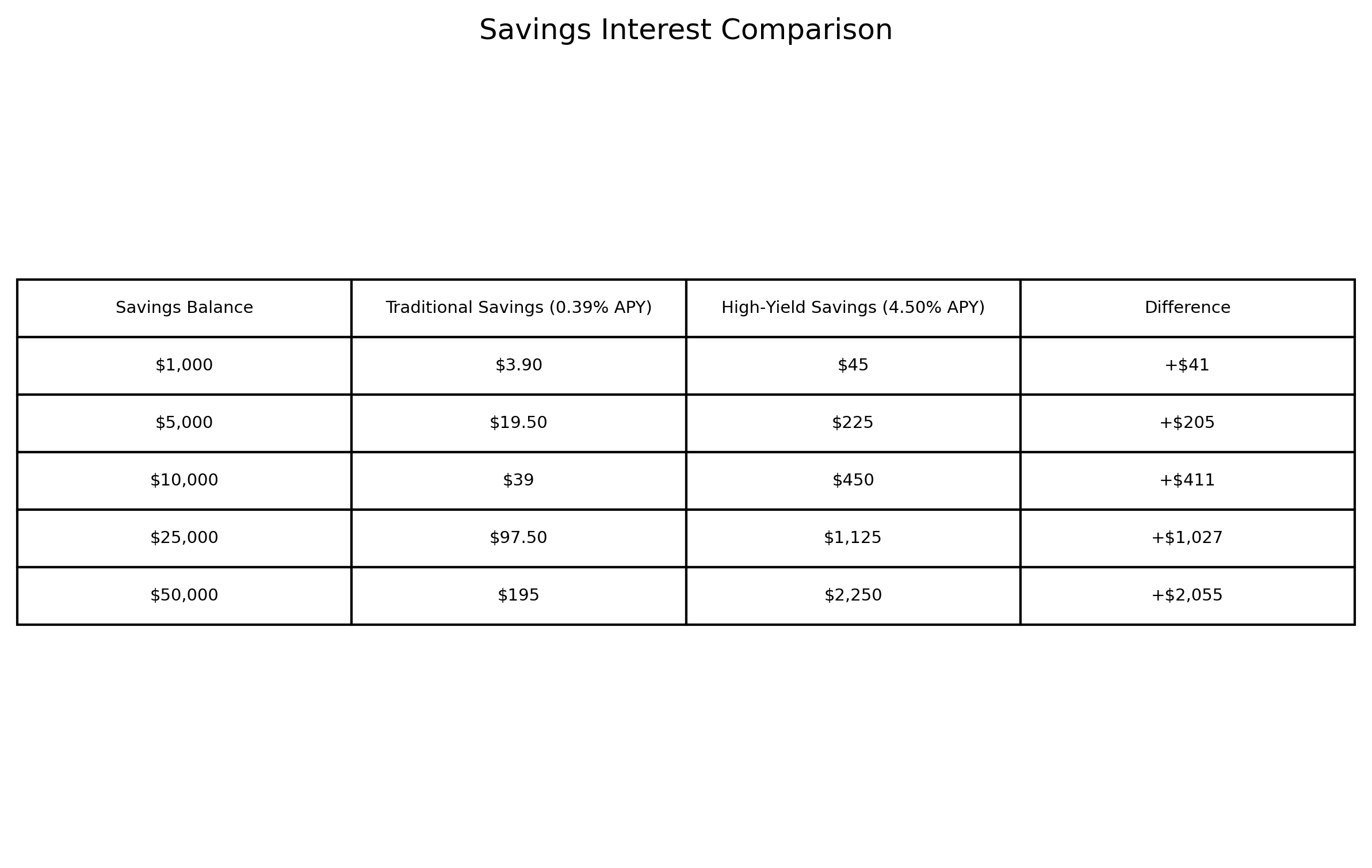
Interest might seem small at first, but it compounds over time. The difference between a traditional savings account and a high-yield account can add up to hundreds or even thousands of dollars.
For example:
If you save $20,000 in a traditional account paying 0.05%, you would earn about $10 per year in interest.
In a high-yield savings account paying 4.50%, that same balance could earn around $900 per year. That difference is why more people are switching to online savings accounts with higher rates.
Best High-Yield Savings Accounts in 2026
Below are some of the most popular online banks offering competitive savings rates in 2026.
SoFi
Best for: All-in-one banking features
SoFi has become one of the fastest-growing financial platforms in the United States. The company offers high-yield savings alongside checking, investing, and lending products.
Key features include:
competitive high-yield savings rates
no account fees
no minimum balance requirements
integrated budgeting tools
Many users appreciate SoFi because it combines multiple financial services into one platform. This makes it easy to manage savings, spending, and investing in a single account.
Open a SoFi high-yield savings account now >>
Ally Bank
Best for: Established online banking
Ally Bank is one of the most well-known online banks offering high-yield savings accounts. It has built a strong reputation for customer service and competitive interest rates.
Some benefits of Ally include:
consistently strong savings rates
no monthly maintenance fees
easy-to-use mobile banking tools
automatic savings features
Ally also offers helpful tools such as “savings buckets,” which allow customers to organize savings for different goals.
Capital One
Best for: Hybrid online and physical banking
Capital One offers a popular 360 Performance Savings account that combines competitive interest rates with the reliability of a major national bank.
Key features include:
strong interest rates compared to traditional banks
no monthly fees
no minimum balance requirements
access to Capital One branches and ATMs
For people who prefer a mix of digital and in-person banking, Capital One can be a convenient option.
Discover Bank
Best for: Simplicity
Discover Bank offers a straightforward high-yield savings account with competitive interest rates and a simple fee structure.
Benefits include:
no monthly fees
no minimum balance
strong interest rates
easy transfers between accounts
Discover is particularly popular among customers who prefer simple banking without complicated features.
CIT Bank
Best for: Higher interest tiers
CIT Bank is known for offering savings products with some of the highest interest rates available. Their savings accounts often provide strong APY rates depending on balance levels.
Key benefits include:
very competitive interest rates
online-only banking efficiency
multiple savings account options
For savers focused primarily on maximizing interest earnings, CIT Bank can be worth considering.
Typical High-Yield Savings Rates in 2026
Interest rates fluctuate based on economic conditions, particularly decisions made by the Federal Reserve. As of 2026, many high-yield savings accounts offer rates roughly within this range:
Account Type Typical APY
Traditional bank savings 0.01%–0.10%
High-yield online savings 3.50%–5.00%
Promotional rates Up to ~5.25%
Rates can change frequently, which is why many savers periodically compare accounts to ensure they are earning competitive interest.
How Online Savings Accounts Work
Online savings accounts operate similarly to traditional savings accounts but without physical bank branches.
Instead, customers manage accounts through:
mobile apps
online dashboards
electronic transfers
Deposits and withdrawals are typically handled through ACH transfers between accounts. Despite being digital, these accounts are generally protected by FDIC insurance, which protects deposits up to $250,000 per depositor per bank. This means your money is just as secure as it would be at a traditional bank.
Advantages of High-Yield Savings Accounts
High-yield savings accounts have become extremely popular because they offer several important advantages.
Higher interest earnings
The most obvious benefit is higher interest. Even a few percentage points of additional interest can significantly increase savings over time.
No investment risk
Unlike stocks or bonds, savings accounts do not fluctuate in value. Your balance will not decrease due to market volatility.
Liquidity
Savings accounts allow easy access to cash. This makes them ideal for emergency funds and short-term financial goals.
Simplicity
Online savings accounts typically have straightforward structures without complicated investment decisions.
Disadvantages to Consider
While high-yield savings accounts are useful financial tools, they also have limitations.
Interest rates can change
Savings rates are variable. Banks may raise or lower interest rates depending on economic conditions.
Lower returns than investing
While savings accounts offer stability, long-term investments such as stocks historically generate higher returns.
Transfer limits
Some banks limit the number of withdrawals you can make from savings accounts each month. These limits rarely affect emergency funds but can matter if you frequently move money.
How to Choose the Best High-Yield Savings Account
Choosing the right savings account involves evaluating several important factors.
Interest rate (APY)
The most obvious factor is the annual percentage yield, which determines how much interest your savings will earn.
Fees
Some banks charge monthly maintenance fees or minimum balance requirements. Many online banks eliminate these fees entirely.
Minimum balance requirements
Some high-yield accounts require minimum balances to earn the highest interest rate. If your balance fluctuates, choose an account with flexible requirements.
Mobile banking features
A good mobile app can make managing savings easier. Look for banks that provide intuitive apps and easy transfers.
How Much Interest Can You Earn?
Let’s look at a simple example of how interest can grow over time.
Assume a savings account pays 4.50% APY.
Savings Balance Annual Interest
$5,000 $225
$10,000 $450
$25,000 $1,125
$50,000 $2,250
These numbers illustrate why moving savings to a high-yield account can significantly increase earnings.
When to Use a High-Yield Savings Account
These accounts are particularly useful for certain financial goals.
Emergency funds
Emergency funds should remain liquid and accessible. A high-yield savings account allows the money to earn interest while remaining available.
Short-term savings goals
Goals such as vacations, home down payments, or large purchases are well suited to savings accounts.
Cash reserves
Many investors keep a portion of their portfolio in cash to provide stability during market fluctuations.
When to Consider Investing Instead
While high-yield savings accounts are useful, they should not replace long-term investing. Historically, the stock market has produced average annual returns around 7–10% over long periods. Savings accounts generally produce lower returns.
Because of this, financial planners often recommend a balanced strategy:
savings accounts for short-term goals
investments for long-term growth
How Much Should You Keep in Savings?
A common recommendation is maintaining three to six months of living expenses in an emergency fund.
For example: If your monthly expenses total $4,000, you might keep:
$12,000–$24,000 in savings
This cushion can provide financial stability during unexpected events such as job loss or medical expenses.
How to Maximize Your Savings Interest
If you want to earn the most interest possible, several strategies can help.
Compare rates regularly
Interest rates change frequently. Reviewing available accounts once or twice per year can help ensure your money earns competitive returns.
Avoid unnecessary fees
Even small fees can reduce your effective interest rate. Choose accounts with minimal or no fees whenever possible.
Automate savings contributions
Automatic transfers can help you consistently build savings without relying on manual deposits.
Separate savings goals
Some banks allow you to divide savings into categories, which can make financial planning easier.
Final Thoughts
High-yield savings accounts have become one of the simplest ways to earn more interest on cash. Compared to traditional bank accounts, the best high-yield savings accounts offer dramatically higher rates while maintaining safety and liquidity.
For many people, switching to an online savings account is one of the easiest financial upgrades available. By comparing interest rates, minimizing fees, and choosing reputable banks, savers can ensure their money works harder for them.
Whether you are building an emergency fund, saving for a major purchase, or simply looking to earn more interest, a high-yield savings account can be an effective tool for strengthening your financial foundation.