Start a Blog on Squarespace and Make Money
A step-by-step guide to launching a Squarespace blog and turning it into a long-term income stream.
Starting a blog used to feel like a hobby project. Today, many blogs function more like small digital businesses.
A well-structured blog can generate income through advertising, affiliate partnerships, and digital products. While building a profitable blog takes time and consistent work, the barrier to entry is lower than it has ever been.
Platforms like Squarespace make it possible to launch a clean, professional website without needing technical skills or web development experience.
This guide walks through how to start a blog on Squarespace and how blogs actually earn money once they begin attracting readers.
The focus here isn’t overnight success. Instead, it’s about building a thoughtful, long-term asset that can grow steadily over time.
Why Squarespace Is a Good Platform for New Bloggers
Before starting a blog, one of the first decisions is choosing a website platform.
Several options exist, including WordPress, Webflow, Wix, and Shopify. Each platform has its advantages, but Squarespace is often appealing for beginners because it simplifies the technical side of running a website.
Squarespace handles several foundational tasks automatically, including:
Website hosting
Security updates
Design templates
Mobile responsiveness
SSL certificates
Built-in analytics
This allows new bloggers to focus on content rather than website maintenance.
Squarespace also offers a clean, professional design aesthetic. Many of its templates are minimal and modern, which works well for personal finance, lifestyle, or educational blogs.
For someone launching a blog for the first time, simplicity can be a major advantage.
Step 1: Choose a Blog Topic (Your Niche)
Every successful blog starts with a clear topic or niche.
A niche helps readers understand what the site is about and helps search engines categorize your content.
Common blog niches include:
Personal finance
Health and fitness
Career advice
Parenting
Travel
Technology
Home improvement
Food and recipes
However, broad niches can be competitive. Instead, many bloggers succeed by focusing on a more specific angle within a larger topic.
For example:
Instead of “personal finance,” a blog might focus on:
Personal finance for midlife professionals
Financial independence after divorce
Budgeting for families
Investing for beginners
Choosing a clear niche helps readers immediately understand the value of your blog.
Step 2: Choose a Domain Name
Your domain name is your website’s address (for example, midlifemoneylab.com).
A strong domain name should be:
Easy to spell
Easy to remember
Relevant to your topic
Short and simple
Squarespace allows you to purchase a domain directly through the platform or connect one purchased through another provider.
Many bloggers choose a .com domain because it remains the most recognizable extension.
Once your domain name is registered, it becomes the foundation of your online presence.
Step 3: Create Your Squarespace Website
After choosing a domain, the next step is building your site.
Squarespace makes this process relatively straightforward.
When creating your site, you’ll choose a template. Templates control the layout and design of your website.
Look for templates that prioritize readability and simplicity. Blogs work best when the design stays out of the way of the content.
A typical blog website includes a few core pages:
Home Page
Your homepage introduces your site and highlights recent or popular posts.
Blog Page
This is where your articles are published and organized.
About Page
The About page helps readers understand the purpose of your blog and who is behind it.
Contact Page
A simple contact form allows readers or brands to reach you.
Step 4: Set Up Your Blog Structure
Before publishing your first article, it helps to think about how your content will be organized.
Many blogs group articles into categories.
For example, a finance blog might include categories like:
Investing
Career
Housing
Financial planning
Organizing content into categories helps readers navigate the site and helps search engines understand how your content relates to specific topics.
Clear structure also allows your blog to grow more easily over time.
Step 5: Write High-Quality Blog Posts
Content is the core of any blog.
While design and branding matter, readers ultimately come for useful information.
Most successful blogs focus on answering specific questions people search for online.
For example, someone might search for:
“How much should I have saved by 40?”
“How to start investing with $1,000”
“Rent vs buy calculator”
Articles that answer clear questions tend to perform well in search engines.
When writing blog posts, aim to:
Address a specific topic
Provide helpful, practical information
Use clear headings and structure
Write in a readable tone
Longer, well-researched articles often perform better in search engines because they provide more complete answers.
Step 6: Understand How Blog Traffic Works
Most blogs earn income only after they begin attracting consistent readers.
Blog traffic typically comes from three sources:
Search Engines
Search engines like Google send readers to blogs when people search for information.
For example, someone searching for “how much net worth should I have at 40” might discover an article answering that question.
Search traffic tends to be the most stable and long-term traffic source.
Social Media
Some bloggers promote their content through platforms like Pinterest, Instagram, or Twitter.
Social media can generate traffic, but it often requires ongoing effort.
Direct Readers
Over time, loyal readers may begin visiting your blog directly or subscribing to your email newsletter.
Building this type of audience usually happens gradually.
How Blogs Actually Earn Money
Once a blog begins attracting readers, several monetization methods become possible.
The most common ways blogs earn income include advertising, affiliate partnerships, and digital products.
Each method works differently.
1. Display Advertising
Display ads are one of the most common ways blogs generate revenue.
Advertising networks place ads on your website and pay you based on page views or ad clicks.
Some popular ad networks include:
Google AdSense
Ezoic
Mediavine
Raptive
Ad networks typically require a minimum amount of traffic before accepting a website.
For example:
Mediavine usually requires about 50,000 monthly sessions
Raptive typically requires 100,000 monthly sessions
Advertising revenue varies depending on the niche.
Personal finance blogs often earn higher ad rates because financial companies are willing to pay more to reach potential customers.
2. Affiliate Marketing
Affiliate marketing allows bloggers to earn commissions when readers purchase products through special referral links.
For example, a finance blog might recommend:
High-yield savings accounts
Investment platforms
budgeting apps
financial software
If a reader clicks an affiliate link and signs up for the product, the blogger earns a commission.
Affiliate marketing works best when bloggers recommend tools they genuinely understand and trust.
Transparency is important, which is why many blogs include a disclosure explaining that they may earn commissions through affiliate links.
3. Digital Products
Some bloggers eventually create their own products.
Digital products can include:
E-books
financial templates
online courses
budgeting spreadsheets
paid newsletters
Because digital products don’t require physical inventory, they can be a scalable income stream once an audience exists.
However, most blogs focus on building traffic first before launching products.
How Long Does It Take to Earn Money From a Blog?
Blogging is rarely a fast path to income.
Most blogs take 6–12 months before generating meaningful traffic.
Search engines take time to evaluate new websites and begin ranking their articles.
Consistent publishing helps accelerate this process.
Many successful blogs publish new articles regularly for at least a year before seeing significant results.
Patience and consistency matter more than speed.
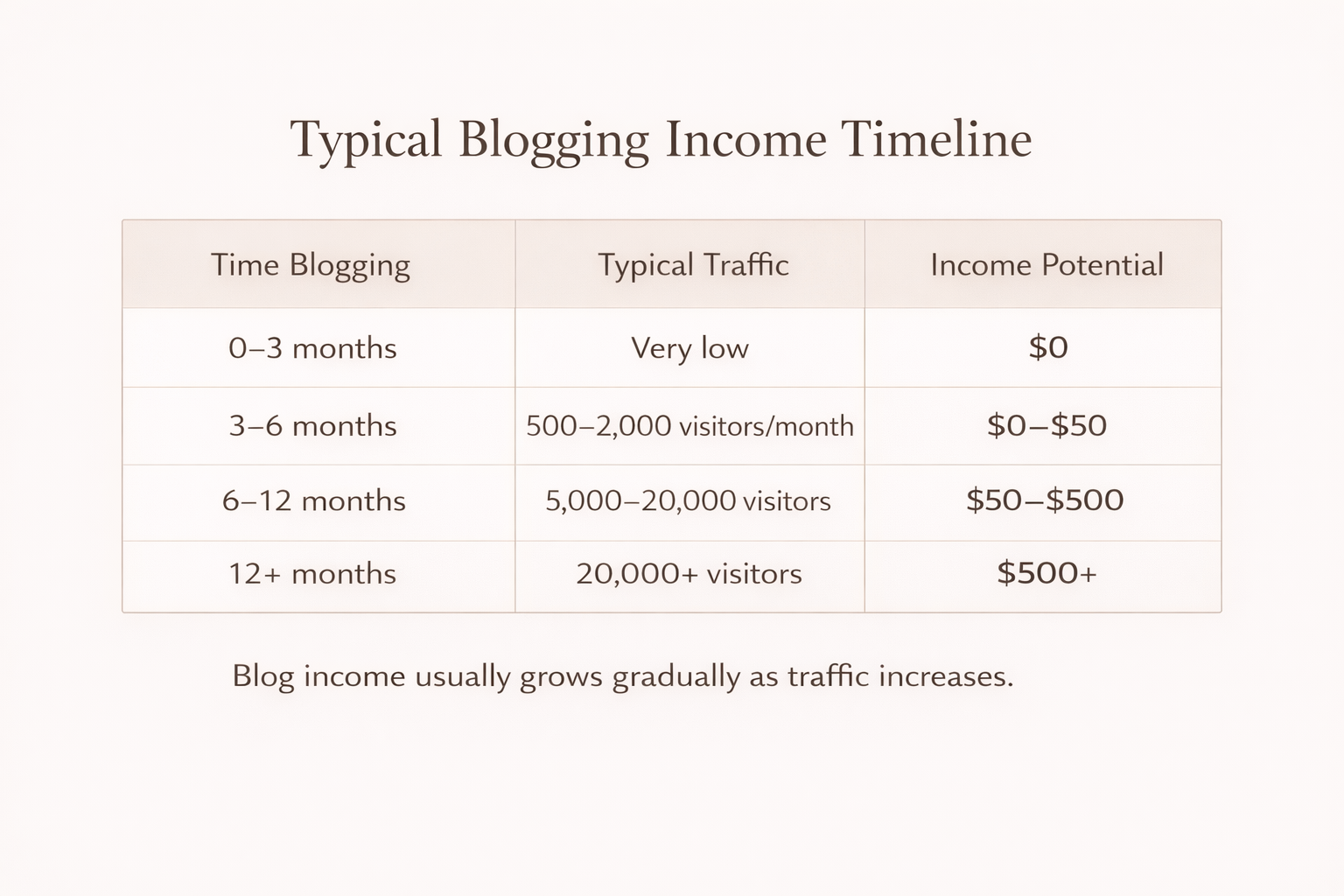
Realistic Blog Growth Timeline
Every blog grows differently, but many follow a similar pattern.
First 3 Months
You publish articles and begin building your website.
Traffic is usually very small during this stage.
Months 4–6
Some articles may begin appearing in search results.
Traffic might reach a few hundred visitors per month.
Months 6–12
Traffic can grow to several thousand monthly readers if articles are ranking well.
This is often when bloggers begin experimenting with advertising or affiliate links.
After One Year
Blogs with 75–100 quality articles may begin attracting consistent search traffic.
Income becomes more realistic at this stage.
What Separates Successful Blogs From Abandoned Ones
Most blogs fail not because the idea was bad, but because the creator stopped publishing.
Successful blogs share several common traits:
Consistency
Publishing regularly builds authority over time.
Depth
Detailed articles tend to perform better than short posts.
Focus
Blogs that stay focused on a specific topic often build stronger audiences.
Patience
Traffic growth often takes months rather than weeks.
Blogging rewards long-term effort.
Is Blogging Still Worth Starting Today?
With the growth of artificial intelligence and social media, some people wonder whether blogging is still a viable way to build an online business.
The reality is that people continue searching for information online every day.
Search engines remain one of the largest sources of traffic on the internet.
Well-written articles that provide thoughtful, useful information can still attract readers for years after they are published.
Rather than disappearing, blogging has simply evolved.
Blogs that succeed today tend to focus on:
high-quality content
specific niches
clear expertise
useful insights
In other words, thoughtful content continues to matter.
Final Thoughts
Starting a blog on Squarespace is one of the simplest ways to launch a website and begin sharing ideas online.
While blogging rarely produces instant income, it can become a meaningful digital asset over time.
With consistent publishing, clear structure, and useful content, a blog can attract readers through search engines and gradually open the door to monetization opportunities.
For many people, blogging starts as a creative outlet or intellectual project.
Over time, it can grow into something more — a platform for ideas, a community of readers, and sometimes even a sustainable source of income.
The key is starting thoughtfully and building steadily.